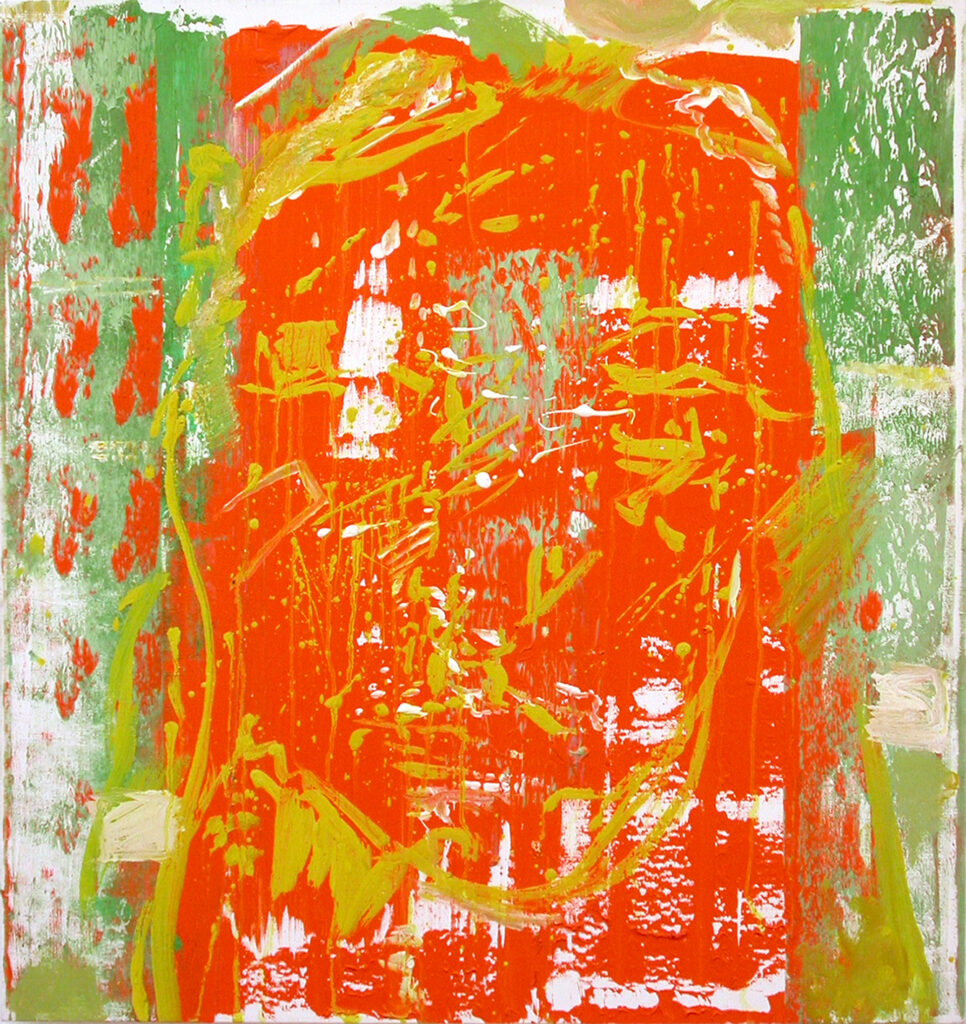
Jörg Madlener is born in Germany in 1939, lived for 35 years in Belgium, and is now living and working in the United States. His paintings have been shown all over Europe and the United States and now again in Mechelen. After a long-standing relationship during which we continued to follow Jörg Madlener’s work, we are delighted to present a retrospective exhibition at the gallery.
He participated in the Venice Biennial, the São Paulo Biennial and has shown with one man shows at the FIAC in Paris, the Art Basel, ARCO Madrid and the Art Fairs in Chicago and Los Angeles. His work has been collected in various museums such as the Solomon Guggenheim Museum, the Museum of Modern Art in Brussels and the Albertina in Vienna. He has taught at the Technical University in Darmstadt, Germany and different academies in Brussels. He designed sets for theater and opera in Europe and the United States.
Opening of the exhibition on Sunday 27 September, 2 – 6 pm.
reception Corsendonk beer
From 29.09 – 22.10.2026 only by appointment.
During Kunstroute Mechelen “Galerie in Beeld”:
Friday 23.10.2026: 6 – 9 pm
Saturday 24.10.2026: 1 – 6 pm
Sunday 25.10.2026: 1 – 6 pm

born 1939 in Düsseldorf
Since 1960
after studying architecture in Darmstadt, he switches to the Städelschule in Frankfurt to study art and is auditor with Theodor W. Adorno and Max Horkheimer at the Goethe University.
Four months he is private student with Otto Dix in Hemmenhofen. Start of stage design work – in close cooperation with Karlheinz Braun – at the student theater neue bühne of the University of Frankfurt, which later expands professionally to theaters in Germany, Belgium, Holland and the USA.
Since 1963
moves to Belgium and continues to study art at the Royal Institute of Fine Arts in Antwerp with Jos Hendrickx.
Belgian citizenship and exhibition of his paintings in the Belgian Pavilion at the Biennials in Venice(1981) and in São Paulo (1983).
Since 1984
his painting develops in extensive cycles and series, bound to major themes, which he pursues over the years, beginning with 32 portraits of Gustav Mahler (1984-2004) through to Jackson Pollok, which encouraged him to move to East Hampton in New York.
Madleners works are in museums around the world, including the Solomon R. Guggenheim Museum in New York, the Albertina in Vienna, the Museum of Modern Art in Brussels and the Bavarian State Painting Collection in Munich. His paintings are in private collections in Belgium, Luxembourg, Switzerland, the Netherlands, France, Spain, Italy, Germany, the United States and the United Arab Emirates.
Since 2003
triggered by the Iraq war, the picture series Sandstorm – the first five days of the war (2003) was created, which was followed by the cycle Kassandra – Cassandra (2007), motivated by a film portrait of Gudrun Ensslin. The picture series Die Frau ohne Schatten – The Jordanian Woman developed from teaching and study activities in Abu Dhabi in 2013. In the series Elegy for Syria (2017), frames from the Syrian civil war are mirrored in 2000-year- old icons such as the Crucifixion and the Pietà.
Since 2019
Recent cycles on the Syrian civil war and other war-related series were shown in the patio of the former Royal Stables in central Brussels under the auspices of the Belgian Academy of Sciences, Letters and Fine Arts and in three Cold War bunker converted to solar energy bearers in the Climate Commune Saerbeck and shown in the Kunsthaus Heylshof in Worms opposite to old masters as at the Sauerland Museum inArnsberg. The bunker in Saerbeck then exhibited for the first time in 2021 a series of works on paper the counterpoint to war, which continues to grow today: a mountain river upstate New York became a daily model under the motto Panta Rhei Nobody sets foot on the same river twice (Heraklit from Ephesus).
Since 2024
the Enapter Campus producing hydrogene generators in Saerbeck offered a montagehall to exhibit and storage.
Artist Jörg Madlener incorporates a deeply philosophical aspect into his works. He sees a correlation between commercial art forces and political forces, in particular those that bring about war. The commercial value assigned to an artist’s work determines whether that artist’s legacy ‘lives’ or ‘dies’: a political entity’s power determines whether a neighboring culture ‘lives’ or ‘dies’. Both are ultimately unrelated to any intrinsic value.
The individual artist is buffeted by these forces his entire life.
‘Art is a rope that can raise one to spectacular heights — or else can serve as a hangman’s noose.’ The four artists who Madlener feels most keenly experienced the pernicious effects of commerce and politics and their various combinations, each of whom has received a philosophico/artistic treatment in a series of paintings, are Gustav Mahler, Robert Musil, Paul Celan and Jackson Pollock.
Natalie Synhaivsky composer, pianist, cofounder of Aspen composers Conference
With Madlener, the tension of the spirit does not prevent sensitivity from emerging everywhere, in touches as convincing as they are discreet. The cerebral does not curb the affective. On the contrary, it wears it. The extreme rigor of the construction and the delicacy of the pure line, recalling that this artist has long studied as a draftsman, combine with the explosion of colors in suggestive spots, for example in the canvases placed under the evocation of the seasons, and particularly of winter, treated here with a kind of chromatic gaiety and a sparkle that hides the secret sadness of destitution under a luminous smile.
But the artist is inhabited by the tensions of the antipodes. The same man who knows so well how to bring out the brilliance of red spots, the fascinating youthfulness of yellow spirals, the unusual liveliness of green, is also the one who makes the bistre and brown tones also dominate in many of his portraits. And this of a brush as nostalgic as changing. This painting has a rare property: it associates, in a harmony always fertilized by its constant questioning, two dimensions which, for most artists, exclude each other, or do not go well together. One is the unbridled inspiration, and the other, the unfailing lucidity, constantly watching the work being done, and surprising itself in the process of watching it. This strange duality can be guessed at every look, and we would detect it immediately, even if we did not know that Madlener received a philosophical training with the masters of the Frankfurt school, and that he has a taste for speculative reflection.
Claude Hagège Paris. Décembre 86
| “His work is also art that deals with art, which means the refusal to eliminate the past, the refusal to see continuity disappear, the rejection of psychic impoverishment and the exclusive aspiration of actuality and current events. Madlener breaks the aesthetic ice that has formed on the swamp of our epoche. Written by Karel J. Geirlandt, 1982 |